
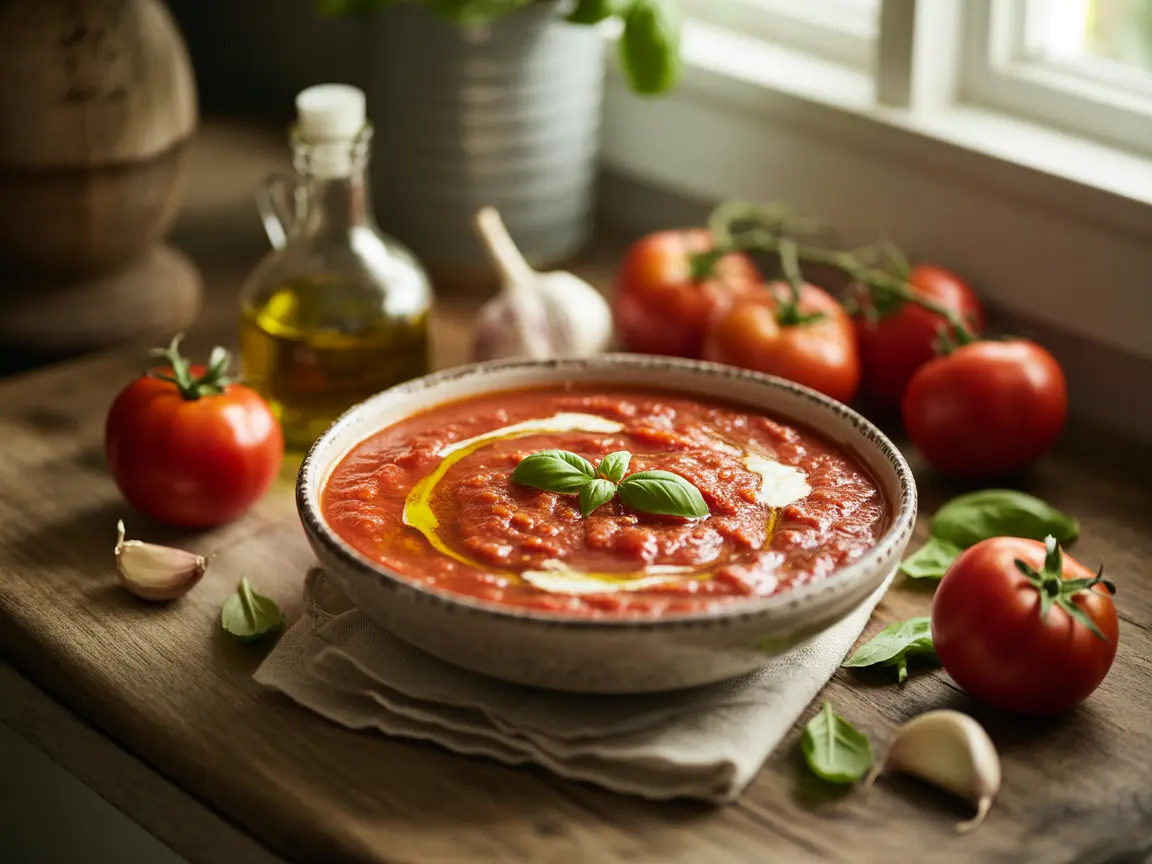
This Fresh Homemade Tomato Sauce Recipe will become your new best buddy in the kitchen if you love bright, fresh flavors and long for something that tastes like summer in a jar.
A rich, aromatic tomato base is created by combining basic, premium ingredients to create a sauce with a lovely combination of sweet, savory, and slightly spicy overtones.
This sauce turns any meal into a comforting feast that you’ll want to taste repeatedly since it’s perfectly thick and creamy while yet being vibrant and fresh.
Ingredients You’ll Need
Making this Fresh Homemade Tomato Sauce Recipe is half the fun if you get the ingredients just right. Whether it’s adding sweetness, depth, or that brilliant fresh color that makes this sauce so unique, each one is essential.
Easy, uncomplicated, yet brimming with possibilities!
- 3 lbs vine-ripened or plum tomatoes: The star ingredient that provides natural sweetness, balanced acidity, and fresh tomato flavor.
- 1/4 cup olive oil: Adds richness and creates a smooth, velvety texture.
- 3 tablespoons garlic paste: Delivers deep garlic flavor without the harshness of raw garlic.
- 2 tablespoons tomato paste: Intensifies the tomato flavor and helps thicken the sauce beautifully.
- 2 fresh basil sprigs (stems for simmering, leaves for garnish): Infuses the sauce with herbal brightness and fresh aroma.
- 1 teaspoon sea salt: Essential for balancing flavors and enhancing natural sweetness.
- 1/2 teaspoon ground black pepper: Adds subtle warmth and depth.
- 1/4 teaspoon crushed red pepper flakes: Provides a gentle heat and complexity.
- 1 tablespoon light brown sugar, packed: Balances acidity while adding a delicate caramel undertone.
The Recipe for Fresh Homemade Tomato Sauce
First, get the tomatoes ready.
To make it easier to remove the tomato skins, start by bringing a big pot of water to a rolling boil. Make 1-inch X’s on the bottom of each tomato with a sharp paring knife as you wait for the water.
Once blanched, this small tip makes peeling a breeze. Here, the tomatoes’ freshness truly comes through, and removing them keeps your sauce smooth and free of unwanted skins.
Step 2: Peel and Blanch
After scoring the tomatoes, place them in boiling water for only two to three minutes, or until the skins start to split.
This brief simmering preserves their flavor while softening the skins, allowing them to easily slide off when strained and placed on a baking pan.
Gently remove the skins and throw them away; here is where your sauce gets that luscious texture that everyone adores.
Step Three: Core and Chop
Peel the tomatoes and remove the tough cores by chopping them into bits.
The sauce can cook down gradually while still having enough body and texture thanks to its sturdy base.
Here, the natural tomato juices are like liquid gold, full of taste that is just waiting to combine with your seasonings.
Build the Sauce Base in Step Four
Heat the olive oil in a big saucepan over low heat. Add crushed red pepper flakes, black pepper, sea salt, tomato paste, garlic paste, and basil sprigs with stems. Carefully sauté the garlic, stirring often, until it browns just enough to release its aromatic scent, about 2 to 3 minutes.
Your kitchen will begin to smell irresistibly at this point, laying the groundwork for the richness of flavor in the sauce.
Step 5: Put the tomatoes together and simmer.
Add the diced tomatoes, light brown sugar, and all of their liquids.
To bring the sauce to a gentle boil, increase the heat to medium-high. After it reaches a boil, reduce the heat and simmer it uncovered for half an hour, stirring often to ensure it thickens uniformly.
All of the ingredients are expertly combined by this slow simmer, which also gives the sauce its traditional homemade richness.
Step 6: Concluding Details
Take the saucepan off of the burner and remove the basil stems; save the fresh leaves for the very end. Add the finely chopped basil leaves, then adjust the salt and pepper to taste.
This last addition of herbs gives the sauce a burst of freshness and aroma that takes it from good to just amazing!
How to Present a Recipe for Fresh Homemade Tomato Sauce
Add-ons
This sauce becomes an instant gourmet treat when freshly grated Parmesan or Pecorino cheese is sprinkled on top.
Just before serving, garnish with shredded basil leaves or a drizzle of fine olive oil for added flare. Every meal feels unique and welcoming thanks to these easy garnishes.
Side Foods
This sauce goes well with a variety of sides, such as roasted vegetables, creamy polenta, or traditional spaghetti or penne.
To add that real, cozy Italian flavor to your plate, try spooning it over grilled chicken or using it as a foundation for meatballs.
Innovative Methods for Presenting
Are you feeling daring? This recipe for fresh homemade tomato sauce can be used as a luxurious topping for savory morning meals like shakshuka or as a dipping sauce for crispy garlic breadsticks.
In order to add layers of flavor and the homemade love that only a fresh sauce can provide, you may also swirl it into soups or stews.
Plan Ahead and Store
How to Keep Leftovers Safe
Once your fresh tomato sauce has cooled, put it in the refrigerator in an airtight container.
It is very convenient for quick lunches throughout the week because it will keep delightfully for up to five days. With a little time, the flavors also blend and get better!
Freezing
This sauce freezes quite well. Leave some space for expansion as you pour it into freezer-safe bags or containers.
When you’re pressed for time, it can be stored for up to three months, ready to thaw and turn any meal into a hearty handmade experience.
Heating up again
On the burner, reheat the sauce slowly over low heat, stirring now and then to avoid sticking.
After cooling, thin it out with a little water or broth if it appears too thick. This preserves the sauce as vivid and fresh as the day you created it.
FAQs
Is it possible to substitute canned tomatoes with fresh ones?
Fresh tomatoes add natural sweetness and brightness, but in an emergency, canned whole peeled tomatoes can be used. To guarantee that the sauce thickens appropriately and has a deep taste, only remember to slightly modify the cooking time.
Do the tomatoes need to be peeled?
Peeling is essential to achieving the silky, smooth texture that distinguishes this recipe for homemade tomato sauce. Taking the extra step pays off in the final mouthfeel because tomato skins can be tough and may detach.
Can I use herbs other than basil?
Of course! Although basil is traditional, you may also try using oregano, thyme, or even a small teaspoon of rosemary to get your own unique take on this fresh sauce.
How hot is this crushed red pepper flakes sauce?
The flavor is enhanced without being overpowered by the faint heat from the crushed red pepper. If you want a milder sauce, you may always skip it entirely or change the amount according to your preferred level of spice.
If my sauce tastes excessively acidic, what should I do?
Tomatoes’ natural acidity can occasionally be a bit harsh. For a flawlessly smooth sauce, you can balance the tastes and reduce the acidity by adding a little more brown sugar or a pinch of baking soda.
Concluding remarks
This recipe for fresh homemade tomato sauce is more than simply a pasta base; it’s a colorful representation of basic elements coming together to make something incredibly tasty. I urge you to get started, have fun, and customize this sauce to your liking. After tasting the depth of flavor and freshness, you won’t ever want to buy from the store again!