
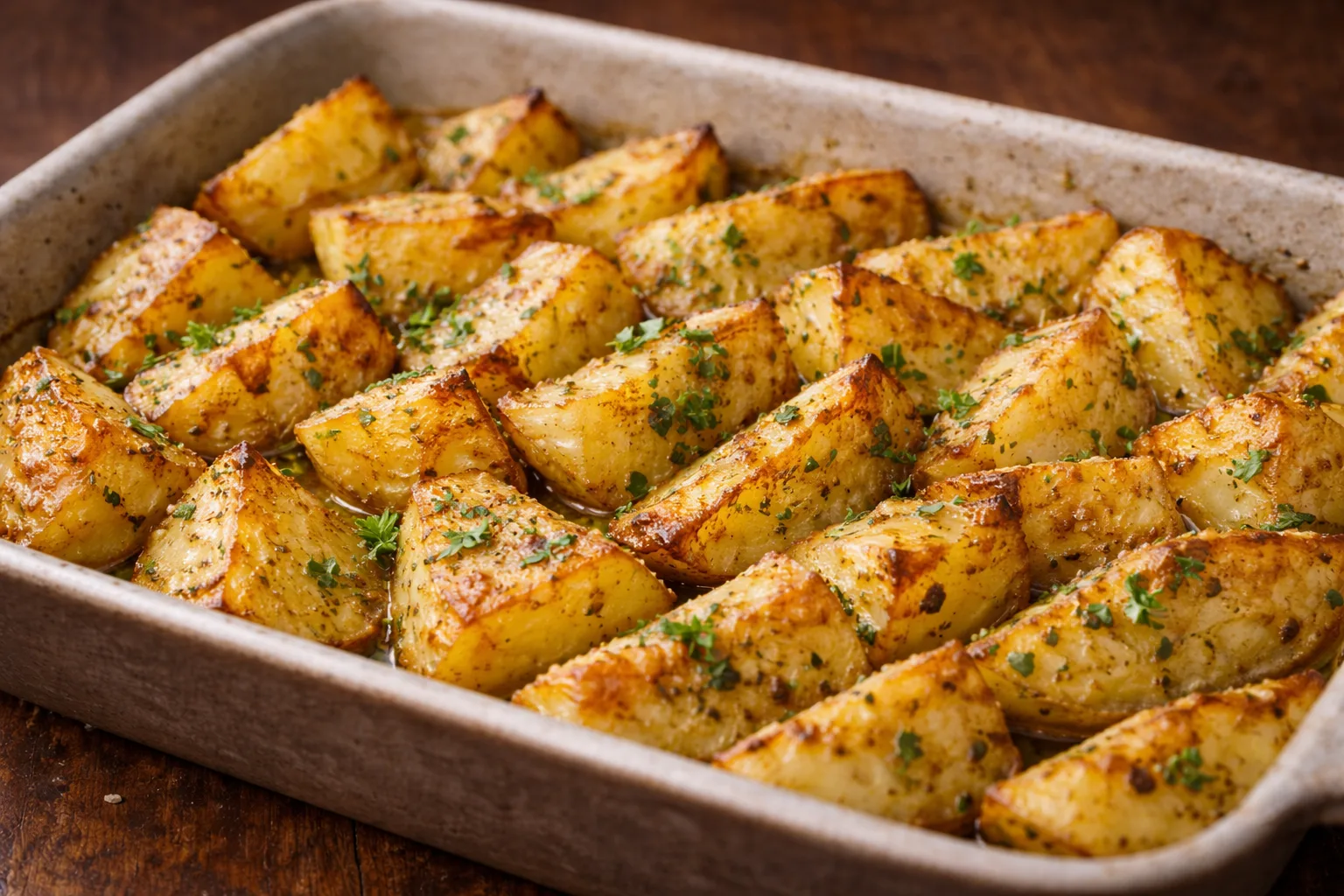
If you want a warm dish with vibrant, robust tastes, the Greek Potatoes Recipe is just what you need. This traditional Mediterranean side dish consists of crisp baking potatoes roasted in a delicious combination of lemon juice, garlic, oregano, and olive oil, resulting in a wonderfully balanced harmony of acidic, herbaceous, and savory flavors. It’s the kind of recipe that transforms plain potatoes into a vivid, tempting dish that goes well with any meal, from weeknight dinners to holiday gatherings. Trust me, once you try this, Greek potatoes will become your new favorite side dish!
Ingredients You Will Need
The charm of this Greek Potatoes Recipe comes from its simplicity. Each ingredient contributes significantly to the sauce’s richness as well as the potatoes’ softness and golden hue. These simple ingredients combine seamlessly to produce a dish that tastes like it took hours of love and attention.
- Baking potatoes (2 and a half pounds): Starchy potatoes produce the fluffiest, softest texture after roasting.
- Chicken stock (1 and a half cups): Provides flavorful moisture, allowing the potatoes to boil delicately and absorb flavor.
- Olive oil (1/2 cup): A rich, delicious base that helps the potatoes crisp up in the appropriate spots.
- Lemon juice (1/4 cup): Adds the bright, zesty flavor that distinguishes this recipe as Greek.
- Garlic (3 minced cloves): This aromatic and pungent ingredient adds warmth and depth to the dish.
- Dried oregano (1 tbsp., or fresh if available) is the typical Greek herb that brings the flavors together harmoniously.
- Salt (1 tsp.): Enhances each mouthful while balancing acidity.
- Fresh ground pepper (to taste) provides a little kick and depth.
- Paprika (optional sprinkle): Adds color and a hint of smoky sweetness.
How to make Greek potatoes recipe
Step 1: Prepare the potatoes.
Begin by peeling the baking potatoes and cutting them into thick wedges. Rinsing the cut potatoes in cold water helps eliminate extra starch, resulting in a nicer texture when roasted. Drain them thoroughly so that they can absorb all of the marinade’s delicious flavors.
Step 2: Create a Flavorful Mixture
In a large baking dish measuring 13 by 9 inches, combine the chicken stock, olive oil, lemon juice, minced garlic, oregano, salt, and freshly ground pepper. This simple yet effective mixture will give the potatoes a characteristic Greek tang and herbal richness while keeping them moist throughout the bake.
Step 3: Coat the potatoes and bake.
Add the potato wedges to the baking dish and toss gently but thoroughly, making sure each piece is well covered with the liquid mixture. This step is critical because it guarantees that each bite is filled with flavor!
Step 4: Roast to perfection.
Bake the potatoes, uncovered, at 350°F for 1 and a half hours. Prick with a fork to check for tenderness; if not quite soft, bake for another 15 minutes. Allow the dish to sit for 10 minutes after removing it from the oven to allow the juices to settle and the flavors to develop more.
Greek Potatoes Recipe: How To Serve
Garnishes
A sprinkle of fresh chopped parsley or paprika can improve the appearance and give a pop of color. A little crumbled feta cheese goes well with the dish, adding a creamy, salty contrast.
Side Dishes
Greek potatoes go well with grilled meats such as lamb, chicken, and cattle. They also go great with a crisp Greek salad or tzatziki sauce, making for a well-rounded dinner that highlights Mediterranean flavors.
Innovative Methods for Presenting
For dinner parties, arrange the potatoes in a rustic ceramic dish with lemon wedges and extra olive oil. Alternatively, cook tiny chunks of leftover Greek potatoes with eggs and fresh herbs for a tasty start to the day.
Making Ahead and Storing
Storage of Leftovers
For up to three days, refrigerate any leftovers in an airtight container. The potatoes will continue to soak up their flavorful fluids, making the next day’s dish even richer, although you may want to reheat carefully to preserve texture.
Freezing
While freshly baked Greek potatoes are ideal, leftovers can be frozen in a freezer-safe container for up to two months. To keep them from turning soggy, freeze on a baking sheet before transferring to a container, and then reheat from frozen.
Reheating
Reheat the Greek potatoes in a preheated 350°F oven until cooked through and golden around the edges. Microwaving the potatoes might turn them mushy, resulting in the loss of their distinctive roasted texture.
FAQs
Can I make this Greek Potatoes Recipe with other varieties of potatoes?
While baking potatoes like Russets are recommended for their fluffy texture, Yukon Golds or red potatoes can be used for a creamier or waxier outcome. Please keep in mind that cooking times can vary slightly.
Is chicken broth required, or can I use vegetable broth instead?
Chicken broth lends a delicious flavorful depth, but veggie broth works just as well if you want a vegetarian option or don’t have any chicken broth on hand. It won’t change the dish’s essence.
Can I replace dry oregano with fresh herbs?
Absolutely! Fresh oregano is excellent and offers a bright herbal note. To get the finest flavor, substitute 2-3 teaspoons of fresh herbs with 1 tablespoon of dried oregano.
How lemony is this recipe’s flavor?
The lemon juice adds a bright and refreshing zing that complements the herbs and olive oil without being overbearing. If you like less acidity, you can reduce the amount of lemon to your liking.
What happens if I don’t have any paprika to garnish with?
Paprika is optional and included primarily for color and a mild smokey flavor. You can leave it out without hurting the overall flavor of the Greek Potatoes Recipe. A pinch of cayenne or smoked paprika also works well.
Final Thoughts
This Greek Potatoes Recipe is a stunningly easy, soul-satisfying dish that will brighten your table regardless of the season. It’s a go-to recipe that’s quick enough for busy weeknights but elegant enough for company. I can’t suggest it highly enough—grab those potatoes and start roasting, because your taste buds are in for a treat!